Unknown's avatar

About Dr. Mitchell

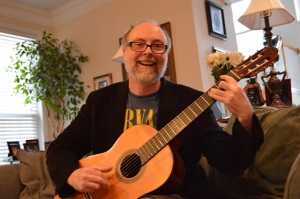
Dr. David Mitchell is a music composer and educator in Atlanta, Georgia. He holds a Doctorate of Musical Arts (DMA) in Music Composition and Theory; Master of Music Composition and a Bachelor Degree in Guitar Performance, all from the University of Georgia.

Apple Music: A Net Positive for Musicians

I think Apple Music will be a net positive for musicians, and it will fundamentally change the business model for music streaming services.

14389613951

Spotify, the most successful streaming service to date, has roughly 70 million members, only 20 million pay a monthly fee for the service. This means only 28% of its customers are willing to pay for music to avoid listening to the commercials; therefore, most people expect music to be free online.

Expecting stuff, especially music, to be free online is so ubiquitous that even musicians refuse to pay for music. For example, I teach at a music school in Atlanta. In one of my classes, I asked my students how many use Spotify; half of the students raised their hand (approximately 10 students). When I asked how many people pay the monthly fee, only 2 students raised their hands. If musicians aren’t willing to pay for music, we’re in trouble.

I believe Apple Music will begin to change this perception by offering better connectivity to the artists, convenience and cross platform continuity at a low price ($9.99 per month for an individual and $14.99 for a family plan). It will be the easiest, most convenient way to download, stream and connect with artists.

Apple Music

Most importantly for artists, Apple Music doesn’t do if for free. THERE IS NO FREE STREAMING OPTION ON APPLE MUSIC. By insisting customers pay for music, Apple Music will began to move the needle away from free streaming toward a paid service model. This is what brought Taylor Swift onboard. Bravo Apple!

The question is, will it work? So far, the jury is still out, but according to an article in the New York Post, “Apple Music has been a surprising success”.

Here are the numbers according to the New York Post Article; Apple Music has signed up more than 15 million customers in its free three-month trial period. It has taken Spotify 8 years to reach 20 million paying customers. Of the 15 million users Apple Music has signed up, roughly half have not turned off auto pay and will convert to paying customers after September 30th. This means 7.5 million paying customers after 3 months, not bad! Watch out Spotify…

If Apple Music is successful, it will represent a major shift in the music industry moving customers away from expecting music for free and toward paying for music once again. This can only be good for musicians.

If you’re a musician, you are asking yourself how much will Apple pay me? Well the first three-month trial period is not over yet, so we don’t have real numbers to work with, but we can get a general idea by comparing Apple’s business model to other services.

In general, the three main players Spotify, Apple Music and Google Play calculate artist revenue in a similar manner. Here’s how they do it. First they take 30% right off the top. Artists share roughly 70% of the gross revenue, not bad. For the sake of round numbers, let’s say Spotify brings in $100 a month through their paid service. Artists get $70 and Spotify keeps $30. Then, they divide your monthly streams by the total number of streams on their service. In other words, if your music streams 10 times and the total number of streams is 100, your percentage is 10%. So you get 10% of $70 or $7.

In reality, the numbers are much bigger of course. Let’s say the total number of streams is 1,000,000 and your streams are roughly 1,000. Divide 1,000 by 1,000,000. Your percentage will be .001 percent per stream. Multiply .001 times 70% of the gross revenue to calculate your total earns.

The nice thing about Apple Music is they will pay artists 71.5% instead of 70% according to an article in Business Insider. Artists will also receive a slightly higher percentage of the gross from overseas sales as well (roughly 73%), nothing to get overly excited about, but an increase nonetheless.

Bottom line is Spotify pays artists roughly .006 to .0084 cents per stream. Apple Music, with its slightly higher percentage, will likely be a little more, but probably not a lot more. The real advantage for artists is it will begin to change consumer expectations from free to paid streaming. A net win for artists. Once consumers are willing to pay for music again, musicians can begin moving toward increased revenue.

Has the industry has turned the corner? Tell me what you think and please share.

Will Apple’s New Music Service Benefit Artists?

Apple’s new Apple Music streaming service is due to launch June 30, 2015. According to the website and Apple’s WWDC presentation, it will be bring together all of the various platforms on which consumers like to listen to music.

According to the company, it will feature music streaming, artist videos, a radio station, curated playlists and “Connect” messaging from artists. All of which will be available on all your devices including iPod, iPad, iPhone and Mac or PC for just $9.99 per month for an individual membership and $14.99 per month for a whole family, up to six people.

Check out the features listed below and a screen shot of Connect, a feature which connects artists to fans.

Screen Shot 2015-06-11 at 10.11.21 AM
Screen Shot 2015-06-11 at 10.01.54 AM

In short, Apple appears to be bringing together YouTube, Twitter, radio and music streaming under a single application. Streaming and YouTube are the two biggest music consumption platforms, and Twitter is how most artists reach out to fans these days.

If Apple pulls this off, they will own the music industry once again. For consumers, this is a win.

But, what does this mean for artists?

Apple is currently pitching their service to artists as the ultimate place to “connect” with fans. What is conspicuously absent is any mention of monetary benefit to the artist.

I have read that Taylor Swift is onboard with Apple, a moderately good sign in the light of her stand against Spotify. Additionally, it is a paid service. There is nothing free here, as I understand it. And I’m sure, as you read this article; frantic negotiations are underway with various labels, artists and music licensing services to secure compensation.

That being said, I don’t see how it is possible for artists to benefit financially in any significant way. In my opinion, especially for the independent artist, the financial benefits will likely be negligible. $9.99 per month is just not a big enough pie for the industry to share, no matter how you slice it.

We will see come June 30th

SHOULD I STREAM MY MUSIC ONLINE?

This is the first in a series of blog posts covering topics related to music marketing. The slides in this post are from a presentation at the 2015 College Music Society Conference in Columbus, Mississippi. I was selected to present on this topic along with my fiancé, Jennifer Jones. Ms. Jones is a marketing expert and principle partner with Anderson Jones PR and Pinpoint Market Research.

Our presentation covered the online music landscape, creative case studies, the social media landscape, the new “publish or perish” model and questions to ask yourself as you design your marketing campaign.

This bog post will focus on the online music landscape, specifically, the pros and cons of online streaming.

The bottom line is online streaming is not profitable for musicians. The decision to stream your music online must be made with this in mind. Here is what the most popular services pay per stream:

The Streaming Business Model:

Screen Shot 2015-04-15 at 6.24.21 PM

These numbers represent an average paid by each service, which can be more or less depending on how many streams you receive per month. For example, Spotify, used by more than 50 million people, takes 30% off the top and divides the remaining 70% of their $10 per month subscription between everyone involved in the recording. They do this by dividing your streams by the total number of streams on their service each month. On average, this works out to be roughly .007 cents per stream. If your song streams 10,000 times you will receive $70 per month on average. This is divided among your band mates, the producer and your label, so you’ll receive enough to purchase a Happy Meal or two, which would be funny, if it wasn’t so sad.

This is why even major artists like Taylor Swift have removed their music from Spotify. According to Time Magazine, her estimated pay out for “Shake It Off” was roughly $280,000 to $390,000. Her total streams for this song were 46.3 million. If we use the high number of $390,000 and divide that by 46.3 million, the average pay out per stream was .0084 cents per stream. Not good, especially if you consider she must divide it between everyone involved in the recording.

By comparison, Michael Jackson sold an estimated 66 million copies of Thriller according to the New Yorker. Sources have estimated his income from this album was roughly $129 to $500 million. Admittedly, this was an album and not a single, but it does illustrate the fact that streaming pays a fraction of what record sales used to pay.

ENGAGEMENT VS. PROFIT

The upside to streaming is engagement with your fans. Streaming does offer the average, independent artist the ability to reach 50 million potential fans on Spotify alone. In a recent survey conducted by Pinpoint Market Research, 31% of millennials said they listen to music on streaming services and roughly 45% discover new music on streaming services like Pandora, Spotify, YouTube and Soundcloud (see the slide below). So, if your goal is to reach fans and drive engagement, streaming can help, but remember, you’re essentially giving away your music to get people to your shows and engage fans.

Screen Shot 2015-04-15 at 5.41.17 PM

WHAT ARE YOUR GOALS?

Before you put your music on a streaming service, you should decide what your goals are. Do you want to profit from the recording itself or do you want to reach as many fans as possible and drive engagement? If profit is your goal, consider placing your music on streaming services that pay the most per stream, probably not Spotify, Pandora or YouTube. If Taylor Swift can’t make a significant profit on these services, you probably won’t either.

In my opinion, musicians should never give away their music. It lowers the bar for everyone in the industry. Instead of racing to streaming services, which pay the least, let’s streaming our music on services that pay musicians fairly. Maybe we can reverse the trend toward lower and lower profits, if we insist on fair payment for our life’s work. For example, 10,000 streams on Spotify will net you $70. 10,000 streams on Rhapsody at .69 cents per stream will net you $6,900, significantly better.

If you agree, comment at #fairpay4music. Please share, comment and tweet your thoughts. Follow this blog for more information in the coming weeks. Let’s make a difference.

Compensate Musicians Fairly: We Demand It Now!

Musicians, it’s time we started demanding just compensation for our life’s work!

Another case of “musicians  being asked to play for exposure” has come to my attention. Ex Cop, a punk duo featuring Amalie Bruun and Brian Harding, was asked by the McDonalds corporation to play at their SXSW show for the exposure only, no compensation whatsoever. McD’s is a mega corporation with a net worth of $97 billion with a B, and they can’t scrap together just compensation for artists. This arrogance blows my mind. When did it become OK to rip of musicians?

ex-cops-300x169

It’s not the first time this has happened. Bruno Mars wasn’t paid a dime when he performed at the 2014 Super Bowl. In fact, the NFL floated the idea of having him pay them to play in order to cover their cost for the multimillion dollar broadcast extravaganza. They suggested he compensate them in a number of creative and self serving ways including sharing a percentage of his record sales and/or tour receipts.

Musicians, we must unite through social media to call out corporations, bars, club owners and venues who attempt to take advantage of us. We can use the power of social media and the power of the purse to make a difference. Let’s take a page from the LGBTQ community and boycott businesses who treat musicians unfairly.

I, for one, will not patronize McDonalds until they make a change. We are not powerless to demand to be treated fairly. The power of the purse will make a difference!

Let’s also stop racing to the bottom with streaming services who pay fractions of a cent and rip off artists at every turn. Check out their compensation model below and click to view details. Please put your music on services that compensate you fairly.

how-to-promote-your-music-online-a-social-media-guide-for-the-musician-10-1024

Let’s wise up and claim our power to make a difference!

Let’s start a hashtag campaign to call attention to abuses in the industry.

Tweet #fairpay4music if you agree.

Boardwalk Empire Opening Theme: Music Sets the Mood

The opening theme for Boardwalk Empire is an excellent example of setting the mood for a television series. The song is “Straight Up and Down” by The Brian Jonestown Massacre, their second album released in 1996, Take It from the Man. According to Wikipedia, this album “is rooted in rhythm and blues and heavily influenced by artists such as The Rolling Stones.”

Click the image below to watch the video in a new window.

This song is anachronistic within the context of the show, but it sets the mood perfectly. From the start, the opening theme song and video draws you in, making you want to watch. It says, “this is hardcore. You’re going to want to stick around and find out what happens next.” It’s also clear that this show is not a sitcom. It’s a serious drama and stuff is about to go down, my friend.

So this theme song does everything a good theme song should do:

  1. It sets the mood.
  2. It let’s you know the type of show you are about to watch (sitcom or drama).
  3. It keeps you in your seat wanting to see more.
  4. It’s also kind of catchy. You can’t help but nod your head and say “yeah man, rock ‘n roll.”
  5. It’s also nice and short, just long enough to do what needs to be done without giving the audience time to change the channel or head for the fridge.

What is most interesting is the juxtaposition of a modern rock song with a television series set in the early twentieth century. Both Nucky’s suit, obviously 1920’s fashion, and the old Boardwalk don’t jive, at first blush, with the music. In addition, the series as a whole takes great care to make everything true to the period from clothing, appliances and cars to music,lingo and mannerisms. If you have watched the entire series as I have, you know it’s almost like looking back into the past, a postcard from the early twentieth century. This juxtaposition is curious and compelling.

So why did the producers choose this song over period music? It’s because period music no longer has the same connotations for a modern audience as it used to have for audiences of the early twentieth century. A modern rock song can reach an audience with more familiar music and push the right emotional buttons which have been put in place by years of exposure to popular music. Period music won’t make an audience think “hardcore, yeah man, it’s about to get real.” Period music does a great job of placing the series within the early twentieth century, a job the producers do so well within the episode itself. It won’t necessarily keep you from changing the channel or thinking “this is a show my grandma would like.”

This juxtaposition is also a classic film trick, namely, combining two polar opposite elements to create a more powerful impact, for example, playing children’s songs during a murder scene. It’s so wrong, it’s right.

In addition, the producers did a great job marrying the video to the music. In most cases, the music is written after the film is shot. In this case, the music came first (1996). For example, the highly distorted guitar is matched by the oversaturated video (nice touch). Also, the violence of the waves and the breaking of the whiskey bottle, at approximately 48 seconds into the video, match the raw sound of the grunge guitar solo which begins at that precise moment reflecting the violent, raw nature of the series as a whole. Also, the solo ends with waves hitting Nucky’s feet at approximately 1 minute 15 seconds with a brief reprise as the camera pans up to Nucky’s face ending at approximately 1 minute 20 seconds. This symbolizes the fact that this series begins and ends with Nucky Thompson. It’s all about his world.

I say bravo to the producers of this opening theme song and video. It serves as an excellent example of how to marry video to music and captivate an audience.

Is It Still Possible to Make a Living as a Private Guitar Instructor?

As a private guitar instructor with over 20 years experience, I have noticed a disconcerting decline in the number of students who sign up for private lessons, and I was curious to learn whether or not other instructors have experienced the same thing. So, I posted the following question to a number of professional groups on LinkedIn including Classical Guitar and Guitar Instructors. Is It Still Possible to Make a Living as a Private Guitar Instructor?

guitar

Out of 45 comments so far, all respondents acknowledged the decline. Most sighted the availability of free instructional videos on YouTube as a major reason for the decline. Walter Peretiatko wrote, “Yes, YouTube has killed a lot of my guitar students…”

In addition, Eric Symons wrote,

“This is a tough subject for me to publicly discuss, as I see a trend that disturbing in the US and other so called “First World” countries. While living in a world that has kids living with inorganic mediums such as video games and computers, and less of them having exposure to music in the schools than any other generation in our history, we must accept a decline in the classical guitar…”

Others pointed to a less vigorous economy. Zane Zirkle wrote, “In a Hope and Change economy, music lessons are a luxury to the average Joe… “ .

Jack Alves wrote, “I too have noticed a slight decline in the over -all teaching biz. From music that’s not all that motivating, to “School of Rock” programs, to students who are willing to forfeit the basics…”

From these responses, it appears there are a variety of factors leading to a decline in the number of students seeking private guitar lessons. The availability of free online content and resources makes it easy for students to learn to play for free in the convenience of their own homes. The sluggish economy and dwindling disposable economy is a factor too. In addition, guitar is no longer the driving force in popular music. Most music is created “in the box” with programs like Ableton eliminating the need to spend years mastering an instrument. Also, there are so many different instant gratification apps, video games, social media sites and digital sources vying for the public’s entertainment time and money. Can an instrument, which requires tremendous personal sacrifice to master, really compete?

bright

What does this mean for the future of private guitar lessons? It’s clear that the days of making a living solely as a private instructor are gone for now. Guitarists and musicians in general, must develop multiple income streams and embrace technology as an integral part of their skill set. For the 21st century musician, it will no longer be viable to simply play or teach an instrument. Lessons will always be a piece of the puzzle, but today’s musicians must know how to write for commercials, film, video games, record voice over, distribute and promote themselves online and through social media. If you have the right skill set, technology becomes a tremendous tool to sell your music and skills to a wider public than ever before.

Most schools and universities are developing music and technology degrees to meet the needs of today’s musicians. For example, Gwinnett County Public Schools now offer courses in music technology which focus on recording, composition, film score and video game composition. Private schools such as The Atlanta Institute of Music and Media also offer degrees in music and technology, job placement and industry contacts, so the future is not bleak, just different than the 80s or 90s.

MT

I agree with Derek Stottlemyer, who wrote, “As a web architect I see a lot of options, and online offers the opportunity to earn passive or residual income in addition to paid lessons – but instructors have to break the mold and be willing to try new things.” Indeed!

2014 Society of Composers National Conference

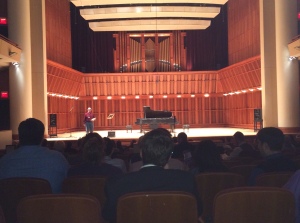
The 2014 Society of Composers National Conference took place March 20-22 at Ball State University in Muncie, Indiana. It featured three days of concerts and paper sessions in Sursa Performance Hall by select composers from across the US. The conference wordpress blog and facebook page contain specific details regarding the concert schedule and events. The overall quality of the concerts and paper sessions was excellent!

Sursa
Inside Sursa

Notably, the majority of concerts featured electronic resources and multimedia. To be sure, there were a number of pieces with traditional acoustic instruments and some old school electroacoustic music with outstanding spatialization enhanced by Sursa’s eight-speaker configuration which enveloped the audience. That being said, many, if not a major of pieces on the program featured both acoustic instruments and either prerecorded electronic accompany or manipulation of live sound in real time. Some pieces also contained video projection in which case, a video screen was lowered above the stage.

audience

It is exciting to note that 21st century composers are embracing technology and multimedia. With all of the new resources available to composers, it seems that composers of new music are blurring the lines between electronic and acoustic music. This most assuredly will be an area of research for some musicologist in the not too distance future.

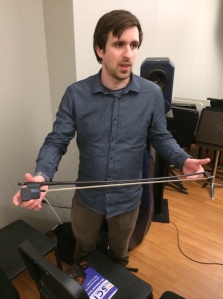
In addition, many of the paper sessions discussed topics related to emerging technologies and live performance. For example, Zachary Boyt discussed MIDI bows, while Orlando Legname presented electronic sensors for conducting which interact with MAX/MSP in real time.

Orlando Legname
Zachary Boyt

It was a great conference. I’m definitely planning to attend the 2015 conference. I would recommend it to all composers of new music who wish to stay abreast of the latest developments in new music.

By the way, I was a presenter at the first paper session on Friday, March 21. My paper was entitled Metamorphoses Nocturnes a Stepping Stone in the Compositional Development of Gyorgy Ligeti.

me
photo(6)

Here are a number of links to photos and other media from the conference:

https://www.dropbox.com/sh/qgo8nrk7t8l6te0/V_HOi3Dh3D

Special thanks to Michael Pounds, Keith Kothman and Jim Rhinehart for organizing such a great conference. If I have left anyone out, my apologizes. Please send me your name and a link to your blog and/or website, and I can include it in this blog. Thanks again! See you in 2015.