Dr. Mitchell’s original composition The Witch’s Hex was given an Honorable Mention at the 2015 Macro Composer’s Society Conference.
Dr. David Mitchell Receives Honorable Mention From the Macro Composers’ Society
Reply
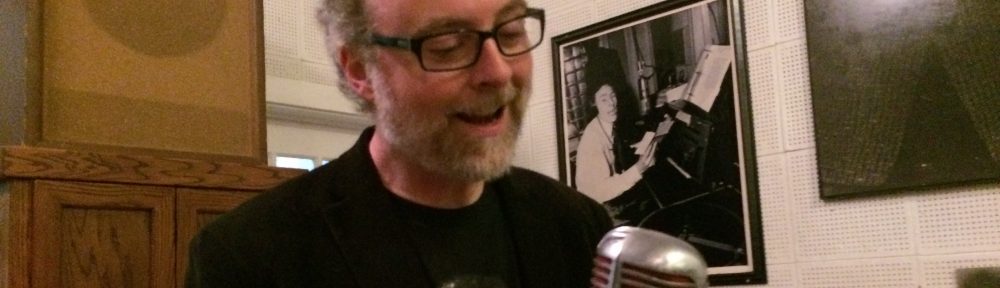
Dr. Mitchell’s original composition The Witch’s Hex was given an Honorable Mention at the 2015 Macro Composer’s Society Conference.
My proposal to the College Music Society, Open Discussion Forum was accepted in December. It’s now live at the link below since January 01, 2016. It will remain open until the end of the month.
If your school offers music and technology classes, please take the survey and share your experience. This study will collect data on how traditional music schools are adapting their curriculum to include a greater emphasis on preparing students for music careers that include aspects of digital music composition, performance and production. This data will become part of my presentation on the same subject at the CMS conference in Alabama.
Since Apple introduced the iPod in 2001, major labels have gradually lost control of the market. They’re no longer the gatekeepers to success they once were. In fact, with the rise of social media, smartphones and streaming services, it has become unnecessary to sign a record deal.
All you have to do is follow the examples of Emma McGann and Lindsey Stirling…
According to the Mirror, Emma McGann is a 25 year old struggling singer who beat George Ezra in the charts, and she’s nipping at the heals of global superstar Ed Sheeran. She started as a local artist performing in clubs and talent shows, but she was unable to attract the attention of major labels. So, she decided to start performing online from her bedroom using a website called YouNow.com. Since October 2014, she has generated 70,000 followers and her debut hit “You Mess Me Up” has reached number 14 in the UK charts. She now makes over £2,000-a-month performing live streaming gigs from her bedroom. Amazing!

YouNow.com is a live video streaming service, which anyone can join and create a channel to discuss any topic, play music or whatever. Essentially, it’s your own broadcast channel, which anyone in the world can watch without logging in. It’s like having your own cable channel and people can tip you using bitcoin. Viewers can search topics including music channels, which feature a number of live streaming artists 24/7. It’s a huge opportunity for musicians to reach a global audience without a major label.
Lindsey Stirling is a dub step violinist who made $6 million on YouTube without a record label. According to aux, the major labels decided not to sign her in 2007. So she created her own YouTube channel. Her Wild Wild West and Game of Thrones inspired videos have built a huge online following. She makes her money through ad revenue, direct music sales, sponsorships and live performances. The major labels are desperate to sign her now.

This bottom line is, opportunities for musicians to generate revenue online are only limited by imagination and sweat equity. So grab your instrument, create a marketing plan and start making money.
Bet you didn’t know “Happy Birthday”, one of the most recognized songs in the English language, was under copyright with Warner, until last week.
Yep! In fact, it has generated significant revenue for Warner since 1988, especially in movies. The licensing fee can be as much as $1,500 to $5,000, which has inspired a number of productions to create alternative versions of the song.
Check out this video to see some examples:
According to a story in the Los Angeles Times, a federal judge in Los Angeles has ruled Warner/Chappell publishing company never had the right to charge for the use of “Happy Birthday to You”.
In 1893, Mildred and Patty Hill published it in a book entitled Song Stories for the Kindergarten. They borrowed the melody from a similar popular song of the era and changed the lyrics to “Good Morning to All”. Patty Hill, a kindergarten principal in Kentucky, encouraged her students to sing it at the beginning of school each morning. It became so popular; her students began to spontaneously sing it at birthday parties, changing the words to “ Happy Birthday to You”.
In 1935, The Clayton Summy Co. published a piano arrangement of “Happy Birthday to You” attributing the composition to Preston Orem and R. R. Forman. The copyright to this particular arrangement was eventually purchased by Warner in 1988. Warner incorrectly charged a fee for any and all versions of “Happy Birthday to You”, but they actually only owned the copyright to a specific piano arrangement. Amazing!
So you can relax. No one’s going to take half of your birthday cake, or a percentage of your birthday presents. : )
I think Apple Music will be a net positive for musicians, and it will fundamentally change the business model for music streaming services.

Spotify, the most successful streaming service to date, has roughly 70 million members, only 20 million pay a monthly fee for the service. This means only 28% of its customers are willing to pay for music to avoid listening to the commercials; therefore, most people expect music to be free online.
Expecting stuff, especially music, to be free online is so ubiquitous that even musicians refuse to pay for music. For example, I teach at a music school in Atlanta. In one of my classes, I asked my students how many use Spotify; half of the students raised their hand (approximately 10 students). When I asked how many people pay the monthly fee, only 2 students raised their hands. If musicians aren’t willing to pay for music, we’re in trouble.
I believe Apple Music will begin to change this perception by offering better connectivity to the artists, convenience and cross platform continuity at a low price ($9.99 per month for an individual and $14.99 for a family plan). It will be the easiest, most convenient way to download, stream and connect with artists.

Most importantly for artists, Apple Music doesn’t do if for free. THERE IS NO FREE STREAMING OPTION ON APPLE MUSIC. By insisting customers pay for music, Apple Music will began to move the needle away from free streaming toward a paid service model. This is what brought Taylor Swift onboard. Bravo Apple!
The question is, will it work? So far, the jury is still out, but according to an article in the New York Post, “Apple Music has been a surprising success”.
Here are the numbers according to the New York Post Article; Apple Music has signed up more than 15 million customers in its free three-month trial period. It has taken Spotify 8 years to reach 20 million paying customers. Of the 15 million users Apple Music has signed up, roughly half have not turned off auto pay and will convert to paying customers after September 30th. This means 7.5 million paying customers after 3 months, not bad! Watch out Spotify…
If Apple Music is successful, it will represent a major shift in the music industry moving customers away from expecting music for free and toward paying for music once again. This can only be good for musicians.
If you’re a musician, you are asking yourself how much will Apple pay me? Well the first three-month trial period is not over yet, so we don’t have real numbers to work with, but we can get a general idea by comparing Apple’s business model to other services.
In general, the three main players Spotify, Apple Music and Google Play calculate artist revenue in a similar manner. Here’s how they do it. First they take 30% right off the top. Artists share roughly 70% of the gross revenue, not bad. For the sake of round numbers, let’s say Spotify brings in $100 a month through their paid service. Artists get $70 and Spotify keeps $30. Then, they divide your monthly streams by the total number of streams on their service. In other words, if your music streams 10 times and the total number of streams is 100, your percentage is 10%. So you get 10% of $70 or $7.
In reality, the numbers are much bigger of course. Let’s say the total number of streams is 1,000,000 and your streams are roughly 1,000. Divide 1,000 by 1,000,000. Your percentage will be .001 percent per stream. Multiply .001 times 70% of the gross revenue to calculate your total earns.
The nice thing about Apple Music is they will pay artists 71.5% instead of 70% according to an article in Business Insider. Artists will also receive a slightly higher percentage of the gross from overseas sales as well (roughly 73%), nothing to get overly excited about, but an increase nonetheless.
Bottom line is Spotify pays artists roughly .006 to .0084 cents per stream. Apple Music, with its slightly higher percentage, will likely be a little more, but probably not a lot more. The real advantage for artists is it will begin to change consumer expectations from free to paid streaming. A net win for artists. Once consumers are willing to pay for music again, musicians can begin moving toward increased revenue.
Has the industry has turned the corner? Tell me what you think and please share.
My Latest Podcast: How to write a dramatic melody for a TV series like The West Wing. I discuss how the melodic structure of the theme song creates a dramatic prelude to the show. Contact me at http://www.davidmitchelldma.com for music composition lessons. Share and comment.
Apple’s new Apple Music streaming service is due to launch June 30, 2015. According to the website and Apple’s WWDC presentation, it will be bring together all of the various platforms on which consumers like to listen to music.
According to the company, it will feature music streaming, artist videos, a radio station, curated playlists and “Connect” messaging from artists. All of which will be available on all your devices including iPod, iPad, iPhone and Mac or PC for just $9.99 per month for an individual membership and $14.99 per month for a whole family, up to six people.
Check out the features listed below and a screen shot of Connect, a feature which connects artists to fans.


In short, Apple appears to be bringing together YouTube, Twitter, radio and music streaming under a single application. Streaming and YouTube are the two biggest music consumption platforms, and Twitter is how most artists reach out to fans these days.
If Apple pulls this off, they will own the music industry once again. For consumers, this is a win.
But, what does this mean for artists?
Apple is currently pitching their service to artists as the ultimate place to “connect” with fans. What is conspicuously absent is any mention of monetary benefit to the artist.
I have read that Taylor Swift is onboard with Apple, a moderately good sign in the light of her stand against Spotify. Additionally, it is a paid service. There is nothing free here, as I understand it. And I’m sure, as you read this article; frantic negotiations are underway with various labels, artists and music licensing services to secure compensation.
That being said, I don’t see how it is possible for artists to benefit financially in any significant way. In my opinion, especially for the independent artist, the financial benefits will likely be negligible. $9.99 per month is just not a big enough pie for the industry to share, no matter how you slice it.
We will see come June 30th…
Click on the picture to read an article about my composition “Lake Avondale” in Decaturish.com. I’m a featured local composer this week! Pretty cool.

A live performance of “Lake Avondale” for classical guitar and piano featuring Jay Kacherski and Lina Morita at The University of Mississippi for Women.
This is the first in a series of blog posts covering topics related to music marketing. The slides in this post are from a presentation at the 2015 College Music Society Conference in Columbus, Mississippi. I was selected to present on this topic along with my fiancé, Jennifer Jones. Ms. Jones is a marketing expert and principle partner with Anderson Jones PR and Pinpoint Market Research.
Our presentation covered the online music landscape, creative case studies, the social media landscape, the new “publish or perish” model and questions to ask yourself as you design your marketing campaign.
This bog post will focus on the online music landscape, specifically, the pros and cons of online streaming.
The bottom line is online streaming is not profitable for musicians. The decision to stream your music online must be made with this in mind. Here is what the most popular services pay per stream:
The Streaming Business Model:

These numbers represent an average paid by each service, which can be more or less depending on how many streams you receive per month. For example, Spotify, used by more than 50 million people, takes 30% off the top and divides the remaining 70% of their $10 per month subscription between everyone involved in the recording. They do this by dividing your streams by the total number of streams on their service each month. On average, this works out to be roughly .007 cents per stream. If your song streams 10,000 times you will receive $70 per month on average. This is divided among your band mates, the producer and your label, so you’ll receive enough to purchase a Happy Meal or two, which would be funny, if it wasn’t so sad.
This is why even major artists like Taylor Swift have removed their music from Spotify. According to Time Magazine, her estimated pay out for “Shake It Off” was roughly $280,000 to $390,000. Her total streams for this song were 46.3 million. If we use the high number of $390,000 and divide that by 46.3 million, the average pay out per stream was .0084 cents per stream. Not good, especially if you consider she must divide it between everyone involved in the recording.
By comparison, Michael Jackson sold an estimated 66 million copies of Thriller according to the New Yorker. Sources have estimated his income from this album was roughly $129 to $500 million. Admittedly, this was an album and not a single, but it does illustrate the fact that streaming pays a fraction of what record sales used to pay.
ENGAGEMENT VS. PROFIT
The upside to streaming is engagement with your fans. Streaming does offer the average, independent artist the ability to reach 50 million potential fans on Spotify alone. In a recent survey conducted by Pinpoint Market Research, 31% of millennials said they listen to music on streaming services and roughly 45% discover new music on streaming services like Pandora, Spotify, YouTube and Soundcloud (see the slide below). So, if your goal is to reach fans and drive engagement, streaming can help, but remember, you’re essentially giving away your music to get people to your shows and engage fans.

WHAT ARE YOUR GOALS?
Before you put your music on a streaming service, you should decide what your goals are. Do you want to profit from the recording itself or do you want to reach as many fans as possible and drive engagement? If profit is your goal, consider placing your music on streaming services that pay the most per stream, probably not Spotify, Pandora or YouTube. If Taylor Swift can’t make a significant profit on these services, you probably won’t either.
In my opinion, musicians should never give away their music. It lowers the bar for everyone in the industry. Instead of racing to streaming services, which pay the least, let’s streaming our music on services that pay musicians fairly. Maybe we can reverse the trend toward lower and lower profits, if we insist on fair payment for our life’s work. For example, 10,000 streams on Spotify will net you $70. 10,000 streams on Rhapsody at .69 cents per stream will net you $6,900, significantly better.
If you agree, comment at #fairpay4music. Please share, comment and tweet your thoughts. Follow this blog for more information in the coming weeks. Let’s make a difference.
 The Music Composition Blog