Optimizing Pro Tools for Professional Performance

Over the past few weeks, I’ve been upgrading my Pro Tools system and studio workflow. If you’re setting up a new system — whether you’re a musician, educator, or audio professional — I want to share the steps I used to tune my rig for professional-level performance.
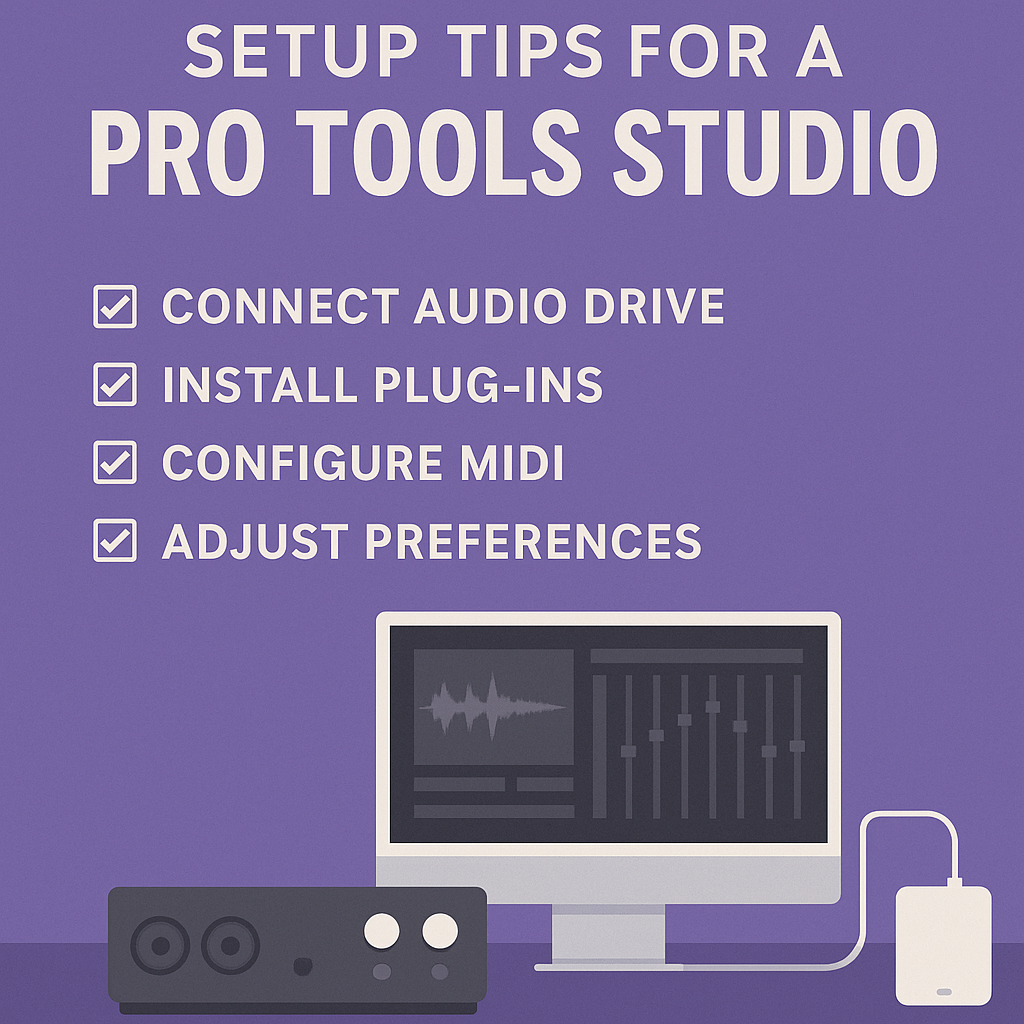
My system now runs effortlessly — even with large sessions and demanding sample libraries — and I hope this guide helps you do the same.


🎼 My System:

  • Mac mini (2024) M4 — 24 GB RAM
  • macOS Sequoia 15.5
  • Pro Tools Studio
  • Universal Audio Volt 2 interface
  • Native Instruments Komplete Standard 15
  • Kontakt 7, Reaktor 6, Session Strings 2, and more

🚀 Why This Matters:

A lot of musicians and educators ask:

“How can I keep Pro Tools running fast — even when using big Kontakt libraries or mixing large sessions?”

The key: setting up two external SSDs and tuning Pro Tools to use them properly.


🎛️ My Setup:

SSD #1 — Native Instruments Libraries
SSD #2 — Pro Tools Sessions


Tuning Steps I Followed:

1️⃣ Disk Allocation:
Made sure all Pro Tools tracks are recording to Sessions SSD — no stray files going to internal Mac drive.

2️⃣ Disk Cache:
Set Pro Tools Disk Cache to 8 GB (for M4 Mac mini w/ 24 GB RAM).
Result: playback is smooth, no lag — even with big Kontakt instruments loaded.

3️⃣ Libraries Relocation:
Moved my Kontakt Factory Library, Reaktor Factory Library, Session Strings 2, and other key libraries to SSD #1 — and repaired paths in Native Access.

4️⃣ MIDI & Playback Engine:
Playback Engine set to Volt 2
MIDI working smoothly — both USB and 5-pin MIDI cables tested

5️⃣ Pro Tools Preferences:
Auto-backup enabled
Project Cache verified
Disk Allocation pointing 100% to SSD #2


💻 Final Results:

Pro Tools now runs perfectly stable — even with:
🎼 24+ audio tracks
🎼 Multiple Kontakt instances
🎼 Real-time guitar playing through amp sims
🎼 Large virtual instruments and Reaktor patches


🎙️ Why This Works:

When you separate your sample libraries from your session audio — and tune your Disk Cache and Disk Allocation — Pro Tools and Kontakt can both stream without fighting for disk bandwidth.

This is the same strategy you’ll see in commercial studios — and it works beautifully on a compact Mac mini rig.


🎹 Final Takeaway:

If you’re running Pro Tools on an M-series Mac, and working with:

✅ Big Kontakt libraries
✅ Pro Tools sessions with 24+ tracks
✅ Real-time tracking of vocals or instruments

…then two external SSDs + tuned Disk Cache will give you professional-level performance — and peace of mind.


If this helped you — or if you have questions about setting up your own Pro Tools system — feel free to reach out. I love helping musicians and educators make the most of their gear!

— Dr. David Mitchell 🎼


P.S. I’m happy to share my full tuning checklist — just ask!

The Music Composition Blog Ranks #7 in Feedspot’s Top 20 List

A Composer’s Inspiration | The Music Composition Blog

I’m thrilled to share some exciting news: The Music Composition Blog has been honored by Feedspot as one of the Top 20 Music Composition Blogs & News Websites to Follow in 2025, securing the #7 spot on their prestigious list. This recognition is a testament to our commitment to providing valuable insights and resources to the music composition community.(Feedspot – 20 Best Compositions Blogs)

Feedspot’s list highlights blogs that consistently deliver high-quality content, and being included among such esteemed company is truly humbling. I extend my heartfelt thanks to Anuj Agarwal and the entire Feedspot team for this acknowledgment.

Over the years, The Music Composition Blog has aimed to be a hub for composers, musicians, and enthusiasts alike. We’ve explored topics ranging from the fusion of classical pieces with unconventional instruments, as in my composition “Clair De Lune with Tibetan Bowls” , to discussions on the evolving landscape of music and technology . Our goal has always been to inspire and inform, bridging the gap between traditional composition techniques and modern innovations.(Clair De Lune with Tibetan Bowls)

This recognition motivates us to continue our mission of sharing knowledge, fostering creativity, and supporting the ever-evolving world of music composition. Thank you to all our readers and supporters for being part of this journey.

Warm regards,

Dr. David Mitchell

Composer, Educator, and Director of Education at the Atlanta Institute of Music and Media

Founder, The Music Composition Blog

Tips and Tools for the Modern Composer

Wedges for Classical Guitar by Dr. Mitchell

I became interested in twelve-tone hexachordal combinatoriality after studying the works of Arnold Schoenberg. Wedges is my latest composition utilizing this approach. I’ve found it to be the most efficient way to cycle through the row and generate a consistent and convincing accompaniment part. It works particularly well in counterpoint.

I decided to share the score and recording on my blog because I thought perhaps music theorists would find it interesting to analyze. Besides hexachordal combinatoriality, there are a number of compositional tools packed into this piece. So, feel free to download and print the score. Here are some things to look for:

  1. Hexachordal Combinatoriality
  2. Wedges – You’ll find musical gestures converging on a single note from opposite directs in counterpoint.
  3. Motivic Parallelism
  4. Augmentation and Diminution
  5. Octave Displacement
  6. Rhythmic Motives in Retrograde
  7. Polymelodies
  8. And More… ; )

Have fun analyzing!

The Matrix

The Wedge

The Score

Wedges – Score

The Recording

https://youtu.be/Ggg6wKhbByI


How to Develop Your Own Voice and Become a Great Composer: The Ligeti Model

In the spring of 2007, Simone Fontanelli, a world renowned composer and professor of new music at the University of Mozarteum in Salzberg, gave a series of seminars at the University of Georgia, Dancz Center for New Music. I asked maestro Fontanelli, “are there any composition exercises you would recommend to help beginning composers develop their own voice?” He suggested borrowing harmonic, melodic and/or rhythmic ideas from three great composers, then write a new piece which combines the best elements of all three. For example, combine Stravinsky’s Petrushka chord, Bartok’s rhythmic motives from String Quartet No. 4 and Schoenberg’s concept of developing variation into a single composition. This is challenging to say the least, and it stretches the abilities of most composers. In addition, this exercise gives beginning composers an opportunity “walk in the shoes” of the world’s greatest composers, thereby, discovering what makes them great. It also helps beginning composers get into the historical flow of what has gone before them.

This idea is not new. All great composers have written pieces “in the style of…” For example, Mozart was influenced by Bach, Haydn and many others. Schoenberg considered himself to be an extension of the German tradition and was influenced by Bach, Beethoven and Brahms.

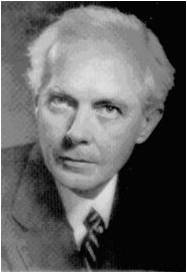
While working on my DMA in music composition at UGA, I read a number of interviews with György Ligeti (1923-2006), one of the most influential composers of the 20th century, in which he discussed the influence of Bartók on his compositional style and technique. Ligeti used Bartók’s String Quartet No. 4 as a model when he wrote String Quartet No. 1: Metamorphosis Nocturnes (1954). In fact, in an interview with Friedemann Sallis, Ligeti stated he knew Bartók’s style so well that “he could have gone on to write the seventh, eighth or even twelfth Bartók quartet.”

Bartok Ligeti

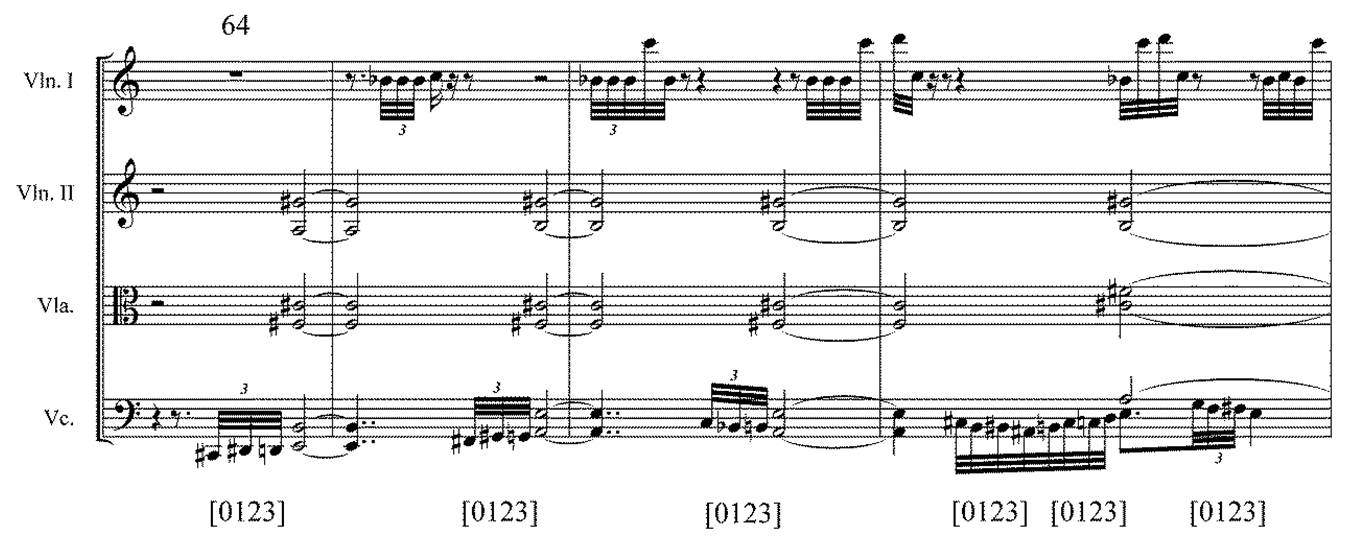
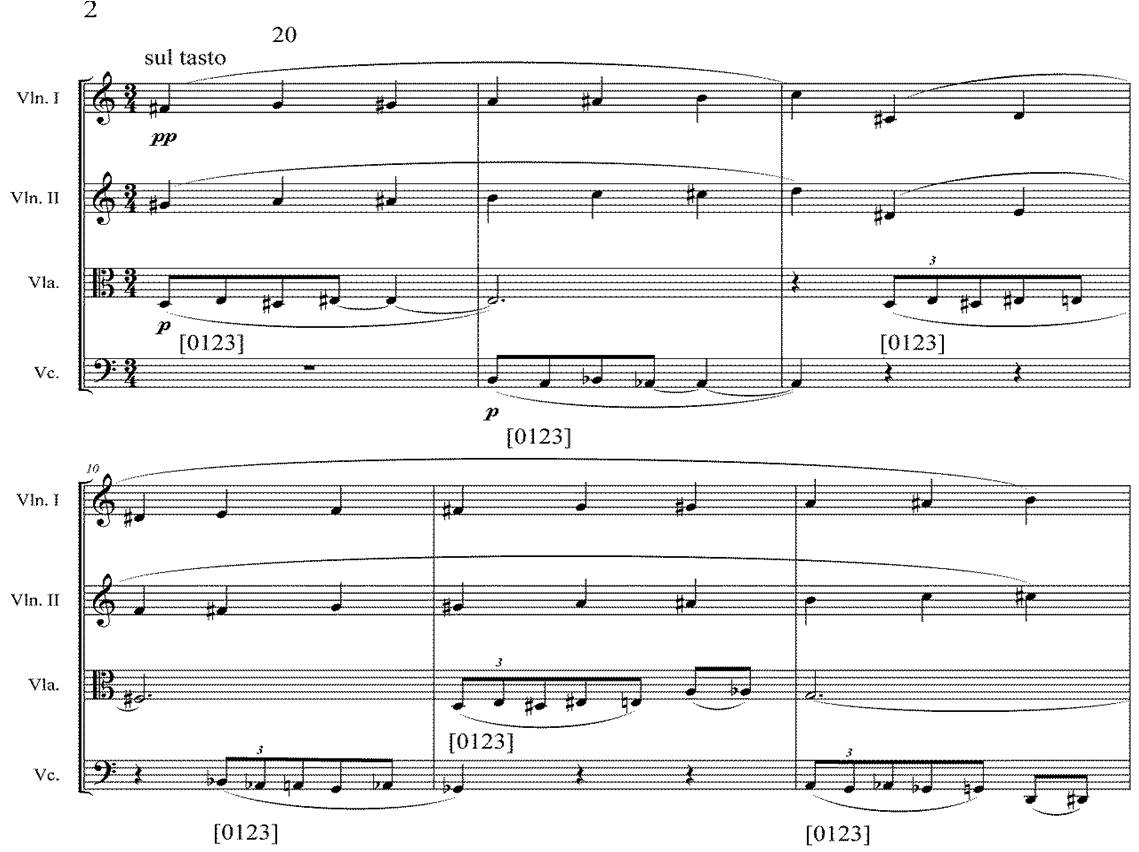
I decided to analyze both quartets to determine if this statement is true and, if so, discover what elements of Bartók’s quartet and style are present in Metamorphosis Nocturnes. It appears that Ligeti borrowed a motive directly from Bartók’s quartet, see Example No. 1. This motive belongs to set class [0123]. Ligeti uses it in the beginning of Metamorphosis Nocturnes, and it becomes the primary harmonic structure throughout the entire quartet, see Example No. 2. It is interesting to note, after writing Metamorphosis Nocturnes, Ligeti continued to use set class [0123] throughout his career, but he added his own twist in the form of microtonality.

Example No. 1

Barok example

Example No. 2Ligeti example

There are a number of parallels between these two quartets, and Bartók’s influence is present throughout to the extent that Ligeti’s quartet sounds more like Bartók than Ligeti. With that being said, Metamorphosis Nocturnes is a model for all aspiring composers. Ligeti wrote his quartet in order to experiment with Bartók’s harmonic and melodic language. He ultimately kept what he liked most from Bartók’s style, eventually making it his own. In the process, he developed his own unique voice. March 20-23, I will present my research at the 2014 Society of Composers Inc. Nation Conference at Ball State University in Indiana.

I would recommend trying the same experiment with your own favorite composer or composers. Borrow a melody/harmony or two. Take it out for a test drive. If you like it, find a way to make it your own!